
Choosing a preschool is one of the most important early decisions parents make, yet it is also one of the most confusing. Glossy brochures, attractive classrooms, and big promises often hide a deeper question that truly matters: Is the preschool’s methodology designed around the child, or around adult convenience? Understanding this difference can help parents make informed choices, whether they are exploring a preschool in Pune, a preschool in Lucknow, a preschool in Kanpur, a preschool in Gwalior, or a preschool in Hyderabad.
Understanding Child-Centric vs Convenience-Centric Methodologies
A child-centric methodology places the child’s developmental needs, interests, emotional well-being, and learning pace at the center of every decision. The curriculum, daily routine, classroom design, and teacher interactions are all shaped to support holistic growth.
In contrast, a convenience-centric methodology prioritizes ease of management for adults. Fixed schedules, rigid worksheets, uniform activities, and minimal flexibility often define such environments. While these systems may appear organized and efficient, they can overlook how young children naturally learn and grow.
Why Methodology Matters More Than Infrastructure
Parents often get impressed by air-conditioned classrooms, digital boards, and colorful furniture. While infrastructure plays a role, it is the methodology that determines whether a child feels confident, curious, and emotionally secure. A preschool in Pune or a preschool in Hyderabad may look modern and well-equipped, but if children are expected to sit quietly for long periods or complete age-inappropriate academic tasks, the learning experience may not truly serve them.
Child-centric preschools recognize that early childhood is about exploration, not performance. They understand that play is not a break from learning—it is learning.
Key Indicators of a Child-Centric Preschool
When evaluating any preschool in Lucknow, Kanpur, Gwalior, or Hyderabad, parents should observe specific indicators that reveal whether the approach is genuinely child-centric.
1. Flexible Daily Routines
Child-centric environments allow flexibility in routines. Snack times, activity durations, and transitions are adjusted based on children’s energy levels and engagement. Convenience-centric models, on the other hand, strictly follow the clock, even if children are tired, hungry, or deeply involved in an activity.
2. Learning Through Play
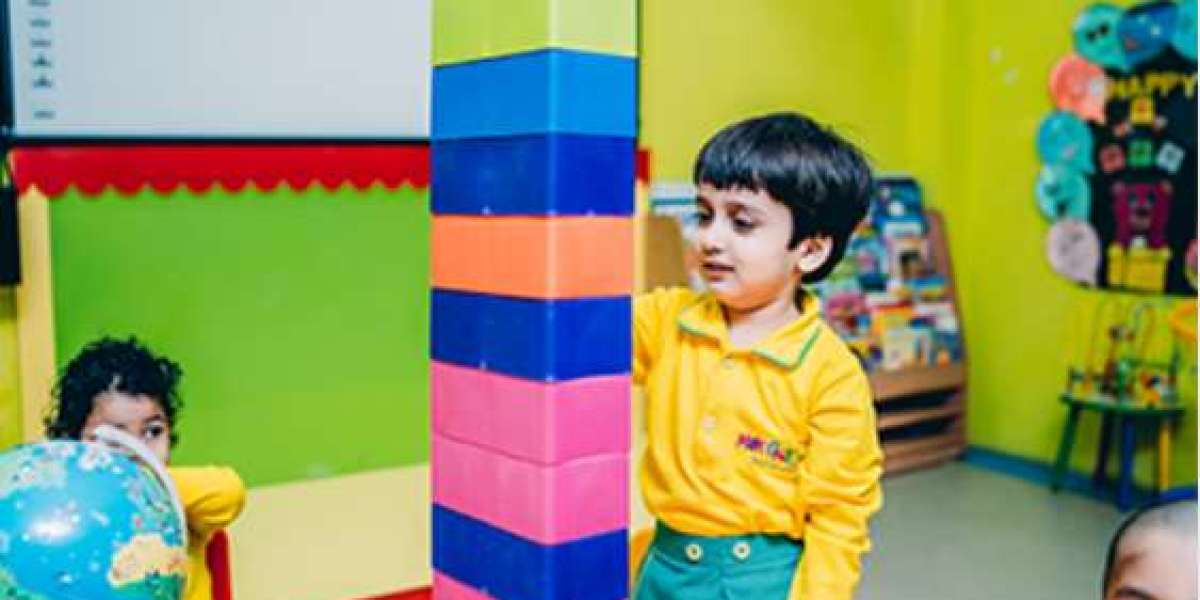
Play-based learning is a cornerstone of child-centric methodology. Storytelling, role play, music, movement, and hands-on exploration dominate the day. In convenience-centric setups, play is often limited to short “free time” slots, while worksheets and rote tasks take precedence.
3. Teacher as Facilitator, Not Controller
In a child-centric preschool, teachers guide, observe, and support rather than instruct constantly. They encourage questions and allow children to express ideas freely. In convenience-driven models, teachers may focus more on discipline, silence, and uniform outputs because it is easier to manage large groups that way.
Emotional Safety and Individual Attention
Emotional security is a non-negotiable element of child-centric education. Young children thrive when they feel safe, heard, and valued. Preschools that truly focus on children invest in smaller group sizes, consistent caregivers, and gentle transition practices.
Whether it is a preschool in Gwalior or a preschool in Kanpur, parents should ask: How does the school handle separation anxiety? Are children forced to “adjust,” or are they supported patiently? Convenience-centric systems often rush this process to maintain operational efficiency.
Curriculum Design: Depth Over Speed
Another red flag of convenience-centric methodology is an obsession with early academics. Parents may hear promises like “reading by age three” or “writing in nursery.” While such claims may sound impressive, they often ignore developmental readiness.
Child-centric preschools design curricula that focus on language exposure, fine and gross motor skills, social interaction, and emotional regulation. Schools like Makoons, for example, emphasize age-appropriate, play-based learning that respects each child’s pace rather than rushing milestones for short-term visibility.
The Role of Assessment in Early Learning
Assessment methods also reveal a lot about preschool philosophy. Child-centric environments rely on observation, portfolios, and informal feedback to track progress. They share insights with parents about social skills, communication, and confidence.
In contrast, convenience-centric preschools may use frequent tests, grades, or comparisons because they are easy to standardize and report. This can create unnecessary pressure on children and parents alike, especially in competitive urban areas such as Pune and Hyderabad.
Parent–School Partnership
A truly child-centric preschool views parents as partners. Regular communication, transparent policies, and openness to feedback are common. Parents are encouraged to understand the “why” behind activities, not just the “what.”
When exploring a preschool in Hyderabad, notice whether the school welcomes questions or becomes defensive. Convenience-centric models often discourage parental involvement beyond fee payments and occasional events, as deeper engagement requires time and effort.
Adapting to Cultural and Regional Contexts
India’s diversity means that children come from varied linguistic, cultural, and social backgrounds. A child-centric preschool respects this diversity and adapts teaching methods accordingly. Whether in Gwalior or Hyderabad, classrooms should reflect inclusivity through stories, songs, and celebrations.
Convenience-centric models often apply a one-size-fits-all approach across locations, ignoring local context. This may simplify operations but can limit children’s sense of belonging and identity.
Long-Term Impact on Children
The impact of preschool methodology extends far beyond early years. Children raised in child-centric environments tend to develop better problem-solving skills, emotional resilience, and intrinsic motivation to learn. They are more confident, adaptable, and socially aware.
On the other hand, children from convenience-centric systems may comply well with instructions but struggle with creativity, independence, and emotional expression later on.
Making an Informed Choice as a Parent
When evaluating any preschool in Pune, Lucknow, Kanpur, Gwalior, or Hyderabad, parents should look beyond surface-level features. Observing classrooms, interacting with teachers, and asking thoughtful questions about methodology can reveal whether the school truly prioritizes children or simply operational ease.
Ultimately, the right preschool is not the one that promises the fastest results, but the one that nurtures happy, curious, and confident learners. Choosing a child-centric approach—like the philosophy followed by Makoons and similar progressive institutions—ensures that early education becomes a strong, joyful foundation rather than a rushed checklist.
In the critical early years, convenience should never come at the cost of childhood.