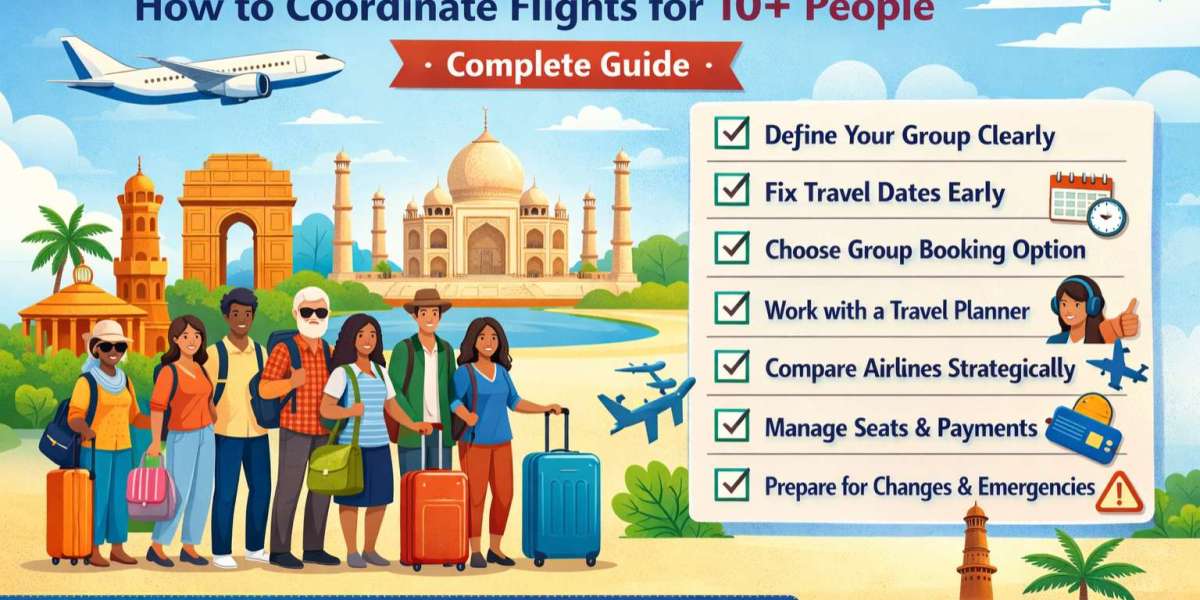

Planning a group tour to India is exciting—but coordinating flights for 10 or more people can quickly become complicated if you don’t approach it strategically. Between managing budgets, aligning schedules, securing seats together, and dealing with last-minute changes, the process requires more than just booking tickets in bulk.
This guide breaks everything down in a practical, user-friendly way so you can plan efficiently, avoid common pitfalls, and ensure a smooth travel experience for everyone in your group.
Why Flight Coordination for Large Groups Needs a Different Approach
Booking a flight for one or two people is straightforward. But once your group crosses 10 travelers, airlines treat it differently.
Here’s why:
Inventory management changes: Airlines don’t always release 10+ seats at the same fare class.
Pricing becomes dynamic: One or two bookings may be cheap, but bulk bookings can increase prices quickly.
Group fares and contracts apply: Many airlines offer special group rates with different rules.
Passenger coordination becomes complex: Names, documents, preferences, and schedules must be perfectly aligned.
Without proper planning, costs can rise, and mistakes can multiply.
Step 1: Define the Group Clearly
Before you even look at flights, you need clarity.
Ask these key questions:
How many travelers are confirmed?
Are there any flexible participants?
What is the age distribution (kids, seniors, etc.)?
Are there special needs (wheelchairs, dietary requirements, etc.)?
What are the preferred travel dates?
Create a shared spreadsheet with:
Full names (as per passport)
Passport numbers and expiry dates
Contact details
Seat preferences (window/aisle)
Meal preferences
This document will become your central coordination hub.
Step 2: Fix Travel Dates Early (Flexibility Saves Money)
One of the biggest mistakes group organizers make is locking in dates too late or too rigidly.
For group travel to India:
Book at least 3–6 months in advance (especially for peak seasons like December, summer holidays, or festival periods).
Be flexible by 1–2 days—this can significantly reduce airfare.
Avoid peak travel days (Fridays, Sundays, holidays).
If your group is flexible, you can save a substantial amount per person, which adds up quickly.
Step 3: Understand Group Booking vs Individual Tickets
You have two main options when booking flights for 10+ people:
1. Group Booking (Through Airlines or Agents)
Pros:
Reserved seats for the entire group
Flexible name submission deadlines
Lower upfront payment (deposit system)
Easier coordination for changes
Cons:
Sometimes slightly higher base fare
Less flexibility with cancellations
2. Individual Bookings (Self-managed or split bookings)
Pros:
Potentially cheaper fares if booked early
More flexibility per traveler
Cons:
Risk of different fare classes
Seats may not be together
Harder to manage changes
Best practice:
For groups of 10+, group booking is usually safer and more organized, especially for international travel to India.
Step 4: Work with a Specialized Travel Partner
Handling a large group manually can be overwhelming. This is where experienced travel planners come in.
A professional agency like Holidaybreakz can simplify the process by:
Negotiating group fares with airlines
Holding seats while you finalize details
Managing documentation and updates
Offering bundled packages (flights + hotels + transport)
If you’re looking for a streamlined experience, working with a trusted provider can save both time and money while reducing coordination stress.
Step 5: Choose the Right Airports in India
India has multiple international gateways. Choosing the right one can impact cost and convenience.
Major Entry Points:
Delhi (DEL) – Best for North India (Golden Triangle, हिमाचल, Rajasthan)
Mumbai (BOM) – Ideal for western and central India
Bangalore (BLR) – Tech hub, good for South India
Chennai (MAA) – Gateway to Tamil Nadu and nearby regions
Kolkata (CCU) – Best for East India
Tip:
If your itinerary is region-specific, fly directly to the nearest airport instead of adding domestic connections.
Step 6: Compare Airlines Strategically
Not all airlines are equal for group travel.
Things to Evaluate:
Baggage allowance
Meal options
Group booking policies
Cancellation flexibility
Layover duration
Popular Airlines for India Routes:
Emirates
Qatar Airways
Etihad Airways
Air India
British Airways
Lufthansa
Pro Tip:
Sometimes splitting your group across two airlines on the same route can save money—but only do this if you’re comfortable managing logistics.
Step 7: Seat Allocation Matters More Than You Think
For a group, seating is not just about comfort—it’s about coordination.
Tips:
Request block seating during booking
Check in as early as possible
Use airline apps to adjust seating
Assign group leaders in different sections if split
Families with children and elderly travelers should always be prioritized.
Step 8: Manage Payments Smartly
Handling money for 10+ people can get messy.
Best Practices:
Collect deposits early
Set clear payment deadlines
Use a shared expense tracker
Keep a buffer for fare changes
For group bookings, airlines often require:
Initial deposit
Balance payment before ticket issuance
Make sure everyone understands the payment timeline.
Step 9: Plan for Baggage and Extras
Group travelers often carry more luggage than solo travelers.
Consider:
Extra baggage pre-booking (cheaper than airport rates)
Sports equipment or special items
Group check-in coordination
Also, check customs rules for India to avoid surprises.
Step 10: Prepare for Changes and Emergencies
With large groups, changes are almost guaranteed.
Common Issues:
Name corrections
Date changes
Last-minute cancellations
How to Handle:
Choose flexible fare options if possible
Keep emergency contacts ready
Have travel insurance for everyone
A single change can affect multiple bookings—so always plan for contingencies.
Step 11: Arrival Coordination in India
Landing is just the beginning.
For smooth arrival:
Arrange group airport transfers
Share a meeting point inside the airport
Assign a group coordinator
Ensure everyone has local contact numbers
Indian airports can be busy, so pre-planning is essential.
Step 12: Use Technology to Stay Organized
Managing a large group manually is risky. Use tools like:
Google Sheets (for passenger data)
WhatsApp groups (for communication)
Flight tracking apps
Shared calendars
Keep everyone informed in real-time.
Step 13: Tips to Save Money on Group Flights
Here are some practical cost-saving strategies:
Book early (3–6 months ahead)
Travel during off-peak seasons
Use group fare negotiations
Be flexible with airports
Avoid last-minute additions
Even saving $50 per person means $500+ for a group of 10.
Step 14: Common Mistakes to Avoid
Many group travel plans fall apart due to simple mistakes.
Avoid these:
Waiting too long to book
Not confirming passenger details
Ignoring visa timelines
Overlooking travel insurance
Poor communication within the group
A little preparation goes a long way.
Step 15: Final Checklist Before Booking
Before you confirm your flights, double-check:
✔ Passenger names match passports
✔ Travel dates are finalized
✔ Budget is approved by all members
✔ Airline policies are understood
✔ Payment structure is clear
This step prevents costly errors later.
Conclusion
Coordinating flights for a group tour to India doesn’t have to be overwhelming. With the right planning, tools, and support, you can turn a complex process into a smooth and enjoyable experience.
The key is to start early, stay organized, and consider professional help when needed. Whether it’s negotiating group fares, managing logistics, or ensuring everyone travels comfortably, a structured approach makes all the difference.
India offers an incredible mix of culture, history, food, and landscapes—and your journey should begin just as smoothly as the destination itself.
By following these steps, you’ll not only save time and money but also ensure your group starts the trip stress-free and ready to explore.