
Modern industrial systems demand extreme precision, high rigidity, and continuous operational stability. Industries such as robotics, CNC machining, medical equipment, semiconductor manufacturing, and automated production rely heavily on accurate rotational performance to maintain productivity. However, many businesses still experience positioning errors, unstable movement, excessive vibration, and unexpected machine downtime that reduce operational efficiency and increase maintenance costs.
In many cases, the real problem is not the machine itself but the bearing system supporting the motion structure.
Poor-quality or incorrectly selected bearings often fail under combined radial, axial, and moment loads. As operational pressure increases, these failures create alignment issues, inconsistent rotation, and rapid mechanical wear.
This is where RU cross roller bearing solutions become critical. Designed for compact, high-precision industrial applications, RU cross roller bearings improve rigidity, reduce vibration, and maintain stable rotational performance under demanding operating conditions.
For B2B manufacturers focused on automation and precision engineering, choosing the right bearing solution directly impacts productivity, machine reliability, and long-term operational costs.
Why Standard Bearings Fail in Precision Machinery
Industrial machinery operating under high-speed and high-load conditions requires stable rotational support. Traditional bearing systems often struggle when applications demand precision movement combined with multi-directional load handling.
As a result, businesses frequently experience problems such as:
- Rotational instability
- Positioning inaccuracies
- Excessive machine vibration
- Premature bearing wear
- Increased operating temperatures
- Frequent maintenance shutdowns
- Reduced equipment lifespan
These issues become more serious in automated production environments where even minimal movement deviation affects manufacturing accuracy and product quality.
RU cross roller bearing systems are engineered specifically to solve these operational challenges.
What Makes RU Cross Roller Bearings Different
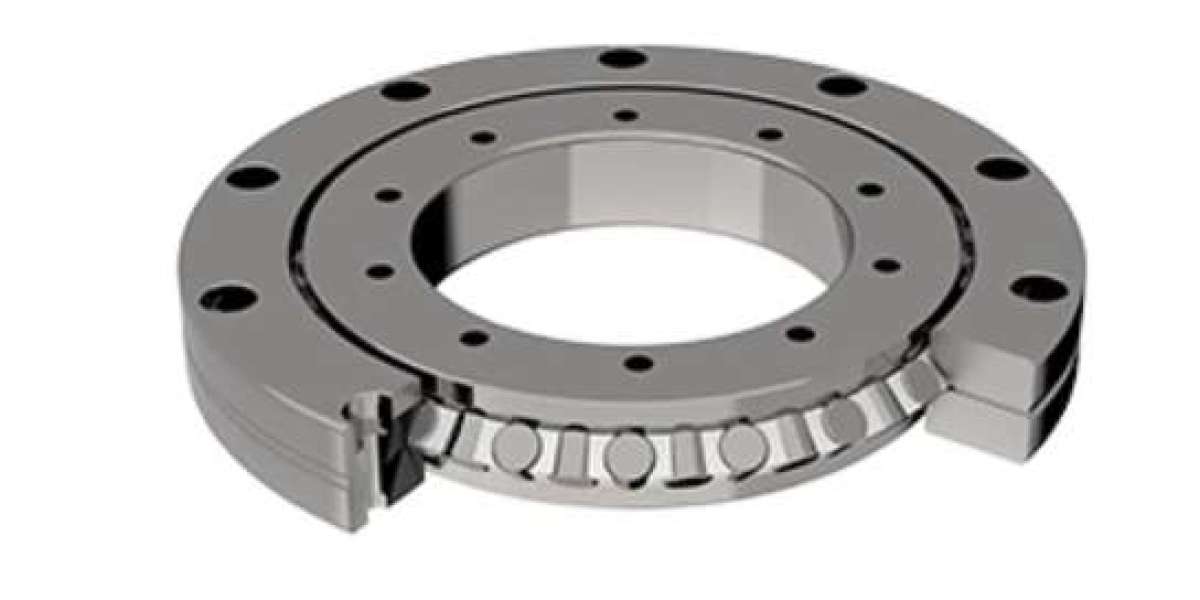
RU cross roller bearings are designed with cylindrical rollers arranged perpendicularly between the inner and outer rings. This structure allows the bearing to support radial loads, axial loads, and moment loads simultaneously.
Unlike conventional bearing systems, RU type cross roller bearings feature an integrated inner and outer ring design that simplifies installation while improving structural rigidity.
Key performance advantages include:
- High rotational precision
- Compact design structure
- Superior rigidity
- Multi-directional load support
- Reduced friction and vibration
- Stable positioning accuracy
Because of their optimized internal structure, RU cross roller bearings are widely used in applications requiring precise rotational control and compact installation space.
Common Industrial Problems Solved by RU Cross Roller Bearings
Positioning Errors in Automation Systems
Robotics and automated equipment require precise and repeatable movement. Standard bearings often create small rotational deviations that reduce positioning accuracy.
RU cross roller bearings improve motion stability and help maintain accurate movement control during continuous operation.
Excessive Vibration and Noise
Vibration negatively affects machine performance, product quality, and component lifespan.
The crossed roller arrangement increases rigidity and minimizes internal displacement, reducing vibration during operation.
Limited Installation Space
Modern industrial equipment is becoming more compact while maintaining higher performance requirements.
RU cross roller bearings combine high load capacity with compact structural design, making them ideal for space-limited systems.
Frequent Maintenance Downtime
Low-quality bearings often fail prematurely under continuous operational stress.
High-performance RU cross roller bearings improve wear resistance and reduce replacement frequency, helping businesses minimize downtime costs.
Industries That Depend on RU Cross Roller Bearings
Robotics and Automation
Industrial robots require stable rotational movement and high positioning accuracy for assembly, welding, and material handling tasks.
CNC Rotary Tables
Precision machining systems rely on stable rotational control to maintain cutting accuracy and surface finish quality.
Semiconductor Manufacturing
Semiconductor equipment requires ultra-precise motion systems capable of operating under strict tolerance conditions.
Medical Equipment
Medical imaging and diagnostic systems depend on smooth rotational movement with minimal vibration.
Aerospace Systems
Aerospace applications require compact and highly rigid bearing solutions capable of handling demanding operational conditions.
Key Benefits for B2B Manufacturers
Businesses investing in RU cross roller bearing solutions focus on operational reliability and long-term efficiency rather than short-term purchasing costs.
Higher Rotational Accuracy
Precision-engineered bearing structures improve positioning consistency and motion control.
Improved Equipment Rigidity
Higher rigidity reduces vibration and enhances machine stability during operation.
Longer Service Life
Advanced material quality and optimized load distribution improve bearing durability under continuous stress.
Reduced Maintenance Costs
Reliable bearing performance lowers emergency repair frequency and reduces production interruptions.
Better Operational Efficiency
Stable rotational systems improve automation accuracy and overall production consistency.
How to Select the Right RU Cross Roller Bearing
Choosing the correct bearing configuration is essential for achieving maximum performance benefits.
Before purchasing, businesses should evaluate several important factors.
Load Conditions
Applications involving combined radial, axial, and moment loads require optimized load-handling capability.
Precision Requirements
High-accuracy systems require bearings manufactured with tight dimensional tolerances.
Speed Performance
High-speed machinery requires low-friction bearing systems with strong thermal stability.
Environmental Conditions
Temperature, contamination, and lubrication conditions directly affect bearing lifespan and operational performance.
Mounting Design
Proper installation compatibility improves system rigidity and reduces alignment issues.
Selecting incorrect bearing specifications often results in operational instability and increased maintenance expenses.
Why Bearing Quality Directly Impacts Industrial Productivity
Many industrial businesses underestimate the operational impact of bearing quality. However, unstable rotational performance affects machine precision, production consistency, and equipment reliability.
Low-quality bearing systems often create hidden operational costs through:
- Increased machine downtime
- Product quality defects
- Higher maintenance labor
- Faster component wear
- Reduced production efficiency
Reliable RU cross roller bearing solutions help businesses improve long-term operational stability while reducing hidden maintenance risks.
For B2B manufacturers, stable machine performance directly supports profitability, workflow consistency, and customer satisfaction.
The Growing Demand for Precision Bearing Solutions
Modern industries are rapidly increasing automation and precision manufacturing investments. As machinery becomes more advanced, the demand for high-rigidity and high-accuracy bearing systems continues to grow.
Industrial applications now require bearing solutions capable of supporting:
- Precise rotational control
- Compact equipment designs
- Continuous operational cycle
- High-speed movement
- Multi-directional load handling
- Long-term durability
RU cross roller bearings play a critical role in helping industrial systems meet these modern performance demands efficiently.
Surgery
Precision, rigidity, and operational stability are essential for modern industrial equipment. Standard bearing systems often fail to deliver the rotational accuracy and load-handling performance required in robotics, CNC systems, semiconductor manufacturing, and automated machinery.
RU cross roller bearing solutions address these challenges by improving positioning accuracy, reducing vibration, increasing rigidity, and supporting complex load conditions within compact designs. Their ability to maintain stable rotational performance under demanding industrial environments makes them essential for precision-driven applications.
For B2B manufacturers focused on reducing downtime and improving operational reliability, investing in high-quality RU cross roller bearing systems is a strategic decision that delivers long-term productivity and performance advantages.